

GTA 6s Map Contains Areas That Could Be Used In The ‘Future,’ Says Rockstar
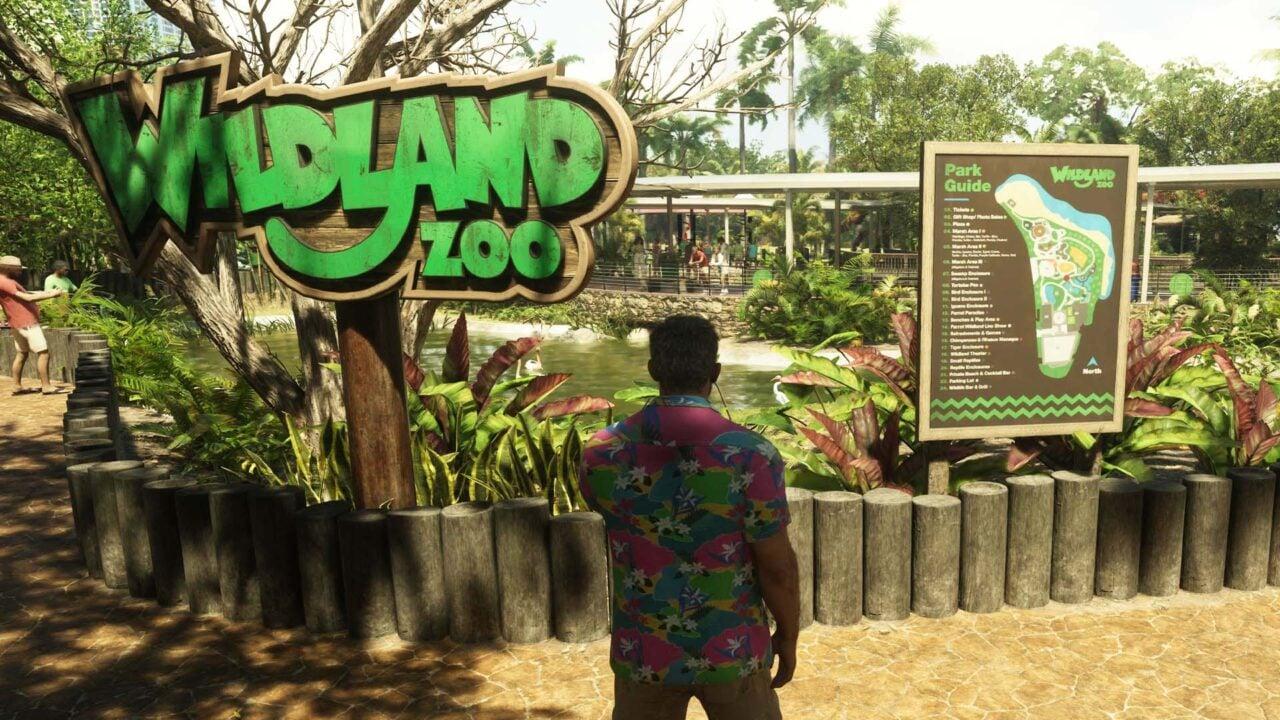
When players finally set foot inside Rockstar Games' upcoming crime epic, they may encounter massive landmarks that play virtually no role in the core campaign. According to reporting from Kotaku, an extended hands-on playthrough spanning upward of 130 hours revealed several sprawling points of interest left entirely untouched by the primary narrative. Among these dormant spaces are an intricately designed zoo, an isolated northern settlement, an expansive graveyard, and a pair of prominent casino resorts that remain completely barred from entry during standard play.
The absence of functional gaming floors inside those towering venues was a deliberate creative choice tied directly to the title's in-game economy. Stephen Donkin, Rockstar’s vice president of design, clarified the studio’s reasoning when questioned about why the protagonists cannot wager their hard-earned cash. "Jason and Lucia’s story didn’t feel like the right place for us to introduce gambling," Donkin explained, pointing to the delicate financial tuning across the campaign: "Especially with the fine balance we sought throughout the economy." Because acquiring funds for crucial needs like weapon purchases and vehicle maintenance requires genuine hustle, permitting players to manipulate save files at a blackjack table to amass quick fortunes would have undermined the grounded struggle Rockstar set out to depict.
Yet these off-limits facilities were not constructed without a strategic purpose. Instead, Rockstar engineered its newest territory as an adaptable canvas meant to accommodate additions over an extended lifespan. Addressing the purpose of these seemingly bypassed locales, Donkin noted, "The map has been built for the long term and with many factors in mind." The design lead further elaborated on that flexible approach, stating, "So there are a few areas on the map that give us options in the future should we have a gameplay or narrative need for them."
This forward-looking architecture lands as anticipation peaks for the title's scheduled 2026 launch on PlayStation 5 and Xbox Series X|S. Marking the franchise's first mainline entry since Grand Theft Auto V debuted in 2013, the game returns players to a reimagined Vice City nestled within the broader state of Leonida. Guiding audiences through this sun-bleached underworld are dual leads Jason and Lucia, whose partnership forms the emotional core of an environment vastly larger and more reactive than any previous project from the studio.
From an industry perspective, Donkin's remarks shed light on how Rockstar and parent publisher Take-Two Interactive intend to navigate the reality of modern game lifecycles. Following a wait that has surpassed a decade, expectations for longevity are unprecedented, and the company clearly cannot afford a disposable geography. Veteran fans will recall how Grand Theft Auto V abandoned early single-player expansion concepts in favor of iterative multiplayer drops, which eventually saw the addition of the Diamond Casino & Resort years after launch. By architecting these specialized physical spaces directly into Leonida's foundation today, the developers avoid the cumbersome retrofitting that characterized Los Santos, establishing a durable platform ready for narrative expansions, live-service evolutions, or whatever roadmap Take-Two envisions to sustain its multi-billion-dollar enterprise.
Ultimately, this modular philosophy highlights a studio building with deliberate foresight rather than delivering a static playground. Leaving secondary locations dormant during the campaign might initially feel like an artificial constraint, but reserving major real estate preserves the integrity of Jason and Lucia's story while guaranteeing that Leonida has genuine room to grow. In an era where post-launch roadmaps make or break blockbusters, planting physical seeds for future content is a disciplined design choice that will likely pay dividends for years after release.