

GTA: Tokyo saw Rockstar negotiate with a Japanese studio, former Grand Theft Auto lead says
Long before the industry fixed its eyes on modern Florida, Rockstar Games actively explored taking its flagship crime simulator across the Pacific. Former Rockstar technical director Obbe Vermeij recently shared candid recollections of the scrapped "GTA: Tokyo" venture during an interview with Rock Paper Shotgun, as GamesRadar reports. The initiative was far more than an idle brainstorming session; publisher Take-Two Interactive went as far as lodging a formal trademark for the title in late 2003 following the breakout success of Vice City, eventually allowing the registration to lapse by 2008.
According to Vermeij, who parted ways with Rockstar in 2009, studio leadership went so far as to pitch the project to external developers in Japan rather than attempting to tackle the project out of Scotland. Though he acknowledged that high-level executive discussions were "above my pay grade," Vermeij confirmed that "there were negotiations with studios" and stressed that "it was definitely serious. It was the plan." Rather than retreating into feudal history, the design targeted a contemporary setting, with Vermeij recalling that "it definitely had samurai swords in it." He added that co-founders Sam and Dan Houser were motivated in part by a lingering frustration that the franchise had not captured the Japanese market to the extent they believed it should, making a homegrown development team an enticing path forward.
While the team casually floated other global metropolises over the years—including London, Paris, Moscow, Istanbul, and Rio de Janeiro—the central creative team continually abandoned foreign locales. As Vermeij outlined, the developer concluded that "there was so much Americana inherent in the IP, it would be really hard to make it work in London or anywhere else." The underlying mechanics of the series demanded ubiquitous access to firearms, exaggerated archetypes, and an outsider's caricature of Western decadence, an equation that resisted translation into foreign cultural landscapes without fundamentally altering what Grand Theft Auto stood for.
Viewed through the prism of Rockstar's subsequent evolution, shelving an overseas detour was undeniably the correct institutional judgment. Grand Theft Auto maintains its cultural potency because it functions as an unsparing mirror held up to American consumerism, celebrity obsession, and civic decay. While farming out a Tokyo spin-off to a regional third party might have yielded an intriguing novelty, outsourcing the franchise risked cheapening its brand prestige and drifting uncomfortably close to established Japanese urban action series like Sega's Yakuza. Retaining tight internal custody of the property allowed Rockstar to concentrate its staggering resources into singular, generational releases, laying the groundwork for the prestige events that define modern Take-Two release windows.
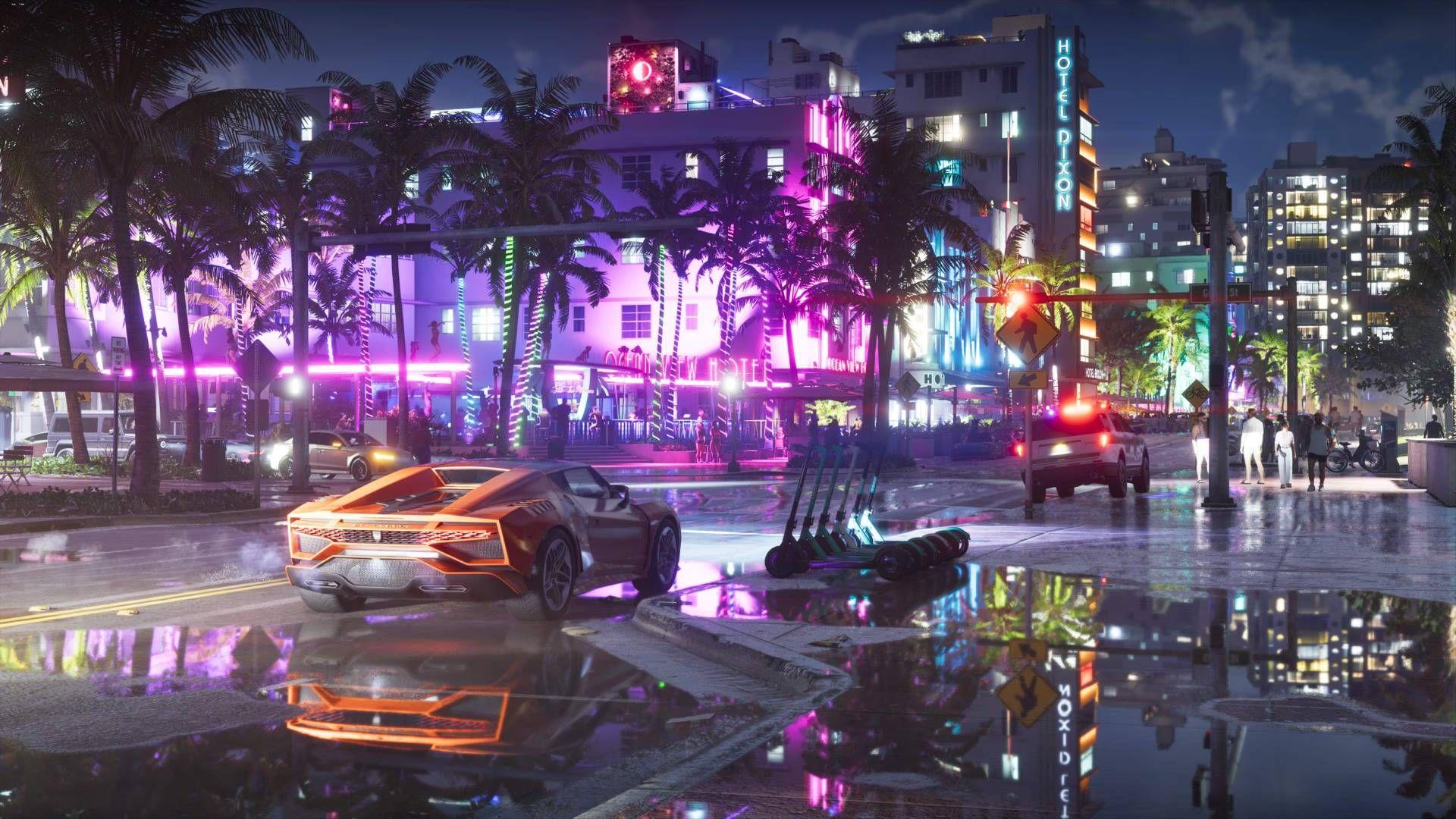
That commitment to dissecting the American experience remains front and center for Grand Theft Auto VI, which marks the series' first mainline chapter since GTA V arrived in 2013. Slated for an anticipated 2026 launch on PlayStation 5 and Xbox Series X|S, the title returns players to a thoroughly modernized Vice City nestled inside the broader state of Leonida. By framing the narrative around dual protagonists Jason and Lucia, Rockstar is once again doubling down on the chaotic, sun-drenched extremes of modern Americana rather than chasing exotic horizons, validating the design philosophy Vermeij and his contemporaries embraced two decades ago.
Uncovering these abandoned paths provides invaluable context for fans enduring the protracted wait between entries. Vermeij admitted that an authentic, Japanese-developed take on the formula would have been a fascinating experiment to play. Yet as the franchise prepares for its biggest launch to date, history shows that Rockstar's refusal to dilute its thematic core remains its greatest competitive advantage: Grand Theft Auto can reinvent its graphics, mechanics, and scale, but its soul will always be chained to the peculiar theater of the United States.