

Massive GTA 6 Mural Tagged By Graffiti Artist Overnight And People Arent Happy: As A Graffiti Artist Myself, I Honestly Think This Is Pretty Disrespectful
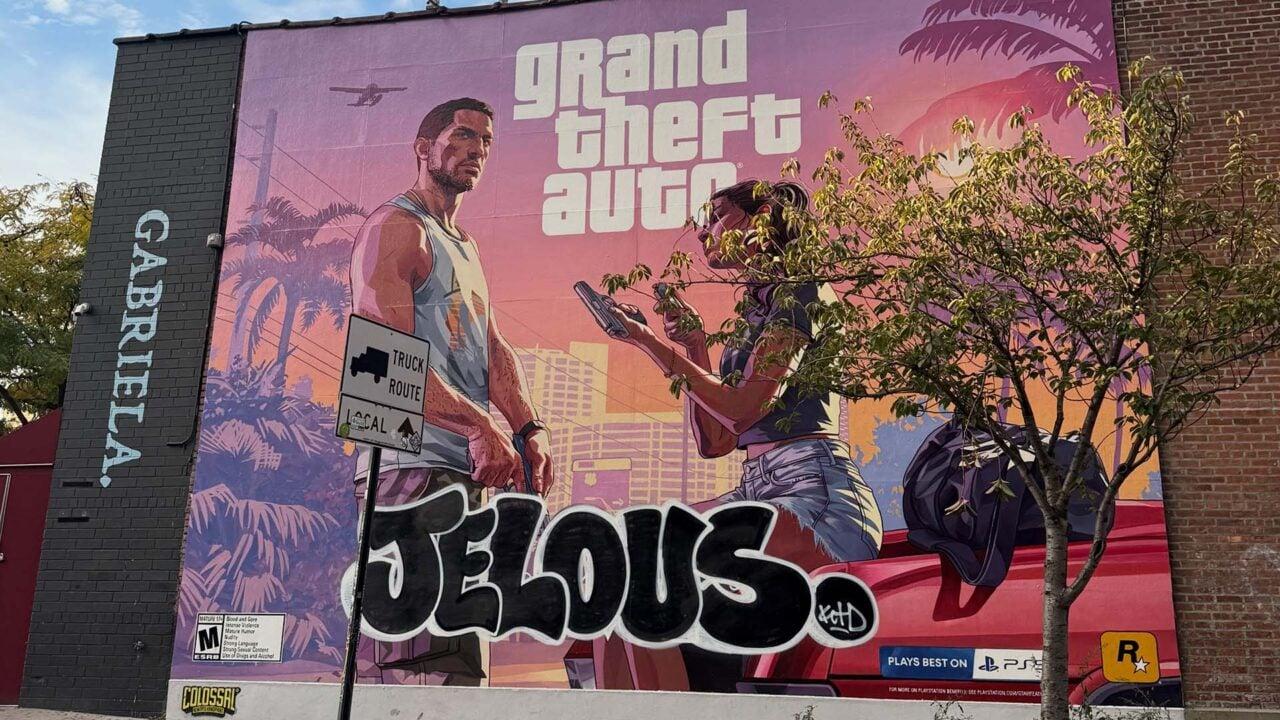
A quiet act of street art in New York City has ignited a heated debate within the Grand Theft Auto community after a graffiti writer known as Jelous defaced a massive promotional mural for the upcoming title. According to Kotaku, the artist slipped out late Tuesday night to spray a simple black-and-white logo across the lower section of the artwork, which had been completing in Brooklyn just weeks prior. The move was not subtle, nor was it hidden for long; Jelous quickly shared images of the defaced piece on Instagram, where the post rapidly gained traction and sparked immediate backlash from fans who had followed the mural’s creation process with great anticipation.
The original artwork, commissioned by Rockstar Games in early October, serves as a significant landmark in the publisher’s marketing strategy, featuring the game’s protagonists, Jason and Lucia, in a large-scale depiction that took approximately one week to complete. For many supporters, the mural symbolized a tangible step forward in the long-awaited return to the franchise’s roots, and seeing it overlaid with a basic signature felt like a violation of that shared excitement. While some defenders argue that corporate-funded public art is a valid target for street expression, the prevailing sentiment among gamers is that the gesture lacked the artistic merit or statement value to justify covering up high-quality, labor-intensive work.
The reaction has been particularly sharp on platforms where fan communities congregate, with many users labeling the action as vandalism rather than art. The distinction between a skilled piece and a quick tag has become a central point of contention, with some Reddit users suggesting that if one intends to interact with public art, the contribution should at least match the effort of the original creators. The incident has forced a broader conversation about the boundaries of street culture and commercial promotion, highlighting how a simple logo can transform a celebrated community milestone into a source of frustration and division.
The debate has attracted voices from within the graffiti community itself, offering nuanced perspectives on the etiquette of the subculture. One user, identifying as an Italian graffiti writer, expressed that while they understand the dynamics of the scene, the specific act of tagging over a hand-painted mural feels disrespectful and cheap. They argued that while going over existing work is common, it typically involves adding skill or a meaningful statement, whereas a random tag over a large-scale commission feels like a cheap shortcut. This viewpoint suggests that even in a culture built on rebellion and reclamation, there are unwritten codes of respect for the time and talent invested by others, regardless of whether the work is commercial or independent.
This incident occurs against the backdrop of a historic release, with Grand Theft Auto VI anticipated to launch in 2026 on PlayStation 5 and Xbox Series X|S consoles. As the first mainline entry in the series since Grand Theft Auto V in 2013, the game represents a generational shift for the franchise, returning players to a reimagined Vice City and the fictional state of Leonida. The presence of Jason and Lucia as the lead characters marks a significant narrative evolution, and the marketing push surrounding the game has been carefully curated to build hype over the final stretch before launch. Any disruption to this narrative, whether digital or physical, carries significant weight in shaping the public’s perception of the brand’s final steps toward release.
From an editorial standpoint, this controversy underscores the intense scrutiny Rockstar Games faces as it navigates the final months of a decade-long development cycle. The mural was designed to humanize the massive corporate entity behind the game, connecting it to local communities and fan culture in a tangible way. However, the incident reveals the fragility of such goodwill in the face of opportunistic attention-seeking. For Take-Two Interactive, which is banking on GTA 6 to drive substantial revenue and cultural relevance, these small but visible frictions matter. They serve as a reminder that the brand’s equity is not just in the code and assets of the game, but in the emotional connection it fosters with its audience, a connection that can be easily chipped away by acts perceived as disrespectful or careless.
Ultimately, the tagging of the mural serves as a microcosm of the larger cultural moment surrounding the game’s release. It highlights the tension between corporate branding and organic community expression, a dynamic that has always been central to the identity of Grand Theft Auto. While the incident may seem trivial in the grand scheme of a global blockbuster, it offers a glimpse into the heightened emotions and expectations that accompany the most anticipated launch in gaming history. As the release date approaches, Rockstar will need to manage these narratives carefully, ensuring that the excitement for the game’s content remains the dominant force, rather than being overshadowed by the noise of its promotional collateral.